A Technical Guide for Architectural, Engineering, and
Construction Professionals
Role of Lavatory Sink in Commercial and Institutional Buildings
In commercial and institutional settings, a lavatory sink is
a part of a comprehensive plumbing and accessibility system.
Factors considered in fixture selections relate to compliance
with ADA requirements, performance in relation to water usage,
durability, infection control, maintainability cycles, and
compatibility with touchless technology.
The correct specification of a sink, faucet, and plumbing
ensures a coordinated function of all these components as per
requirements in airports, healthcare, education, hospitality,
government institutions, and other sectors.
ADA Access RequirementsWaterSense and Water Efficiency CriteriaCALGreen RequirementsASME/CSA Product Standards
WaterSense labeled residential lavatory faucets:
Max 1.5 gpm @ 60 psi; min 0.8 gpm @ 20 psi
Public lavatory faucets, non-metering: Maximum of
0.5 gpm at 60 psi as per ASME A112
While choosing a low flow faucet, it has to be ensured
that it fits well with the dimensions of the basin to
avoid splashing of water and delayed
CALGreen Requirements
Read More
CALGreen
,
for projects in California, sets mandatory values for
flow rate.
“Many jurisdictions that implement CALGreen are required:
"Private Toilets": Less than 1.2 gpm when
Public Toilets: Typically 0.5 gpm; Varies with type
of fixture
"Owner portfolios that exist in multiple states will
usually standardize all their properties in a similar
way to CALGreen."
ASME/CSA Product
Read More
Lavatories have to comply with the relevant product
standard, which depends upon the lavatory material used.
This standard has to be followed for different types of
Faucets and supply fittings:
ASME A112.18
Ceramic lavatory fixtures:
ASME A112.19
Stainless Steel Lavatory Fittings:
ASME A112.19
“These specifications cover matters pertaining to
durability, structural load tests, impact resistance,
glazing, stainless steel thickness, and overflow
performance.”
Requires in-wall carriers and has to meet structural
load specifications.
Provide superior floor clearance for janitorial
access and ADA compliance.
Drop-in/Self
Counters are supported; designers must take into
consideration counter thickness in relation to ADA
specifications.
Undermount lavatories
Provide clean-cut edges but with coordinated cut-out,
support, and waterproofing.
Trough/Multi-user Toilets
Often found in public restrooms with a lot of traffic.
Must handle concurrent flow from multiple low flow
faucets.
Basin Geometry and Hydraulic Behaviour
Read More
Design of basin must factor in that a flow rate of
0.35-0.5 gpm in public restrooms is being projected.
Proper slope to the outlet in order to minimize
residual water
Anti-splash geometries for aligning sensor faucets
Drain offsets to minimize splash back
Overflow configurations that comply with infection
control policies and ASME requirements
Structural Load Factors and Maintenance
Read More
Structural Load Factors
Normally,
Public facilities necessitate fixtures that are able to
withstand usage as well as abuse. Carriers and mounting
hardware would ideally support ≥ 300 – 400 lbs.
Vandal Resistance
Specify:
Hidden Fasteners
Anti-ligature designs where needed
Stainless Steel Systems in High-Risk Areas
Serviceability
“Lavatory assemblies must provide access for tool use
to:”
Supply stops
Traps and cleanouts
Sensor modules, mixing valves, batteries, and
solenoid valves
Under sink enclosure designs are also needed to
accommodate ADA knee clearance while providing
protection.
Materials and Finishes
Material Options
Read More
Vitreous china (ASME A
Resists rough use and chemicals; check edge
strength and thickness.
Stainless Steel (ASME A112.
Their resistance to impacts and hygienic
properties make them popular in healthcare,
corrections, and industrial institutions.
"Solid surface/engineered stone"[
Helpful in deep trough systems; demands precise
support, seam definition, and careful provision
for thermal movement.
Sustainability and Water Performance
Read More
Sustainability and Water Performance
Flow Rate, Drainage, and User Experience
In cases of lower flow rates, the following should be
taken into consideration
Water Splash Control with Bowl Shape and Faucet
Projection
Satisfactory drainage with low flow.
Slope & Pipe Sizing for Reducing Microbial Growth
in Low-Flow Scenarios
WaterSense and Portfolio Integration
WaterSense provides a common performance metric for
multi-building portfolios. Reference:
The performance goals in CALGreen are set above federal
requirements. Using CALGreen benchmarks can facilitate
the provision of LEED v4.1 IDc credit paths and
owner-level sustainability goals.
System Integration, Controls, and BMS Connectivity
Synchronizing Touchless Faucet
Read More
A sensor-controlled faucet needs to be placed in a
precise way in relation to the bathroom sink in order
to avoid misfires and splashing.
Another important consideration for designers is access,
low-voltage wiring, and maintainability.
"Most bathrooms have a requirement for thermostatic
mixing valves with an ASSE 1070 rating to eliminate
scalding. This becomes most important when it comes to
healthcare and K-12 institutions. Valve location must
also comply with ADA clearance and maintainability."
The lavatory sink fixture represents a cross-functional
area where multiple considerations, including
accessibility, sustainability, plumbing engineering,
and architectural detailing, intersect.
Proper specification, which remains informed by
considerations from ADA, ASME, CALGreen, and WaterSense,
ensures that the fixture functions effectively in a
high-demand application.
A systems-oriented approach, whereby a comprehensive
lavatory offering, including faucets, valves, hardware,
and building automation systems, integrates with other
related systems, can make this a reality.
Check for WaterSense certification, where necessary.
Conclusion of Main Design Considerations
Role of Lavatory Sink
Read More
"The lavatory sink
In commercial andinstitutional spaces, a lavatory sink
would be part of a well-structured plumbing and
accessibility feature.
The choice of fixture influences ADA compliance,
performance with respect to water usage, longevity,
infection control, maintenance cycles, and compatibility
with touch-sensitive technology.
Proper Specification
Read More
Proper Specification
Proper specification also provides for effective
functionality of the sink, faucet, and associated
plumbing as a coordinated effort, complying with various
requirements of building specifications, product
specifications, and functionality in airports,
healthcare, education, hospitality, and government
sectors.
A Word about Codes and Performance
Read More
A Word about Codes and Performance
ADA Access Requirements, WaterSense and Water Efficiency
Criteria, CALGreen Requirements, and ASME/CSA Product
Standards influence fixture form, flow rates, materials,
and structural characteristics.
Typologies and Geometry
Read More
Typologies and Geometry
When Mounting types (wall-mounted, drop-in rimming,
undermount, trough sink, multi-user bathroom), as well
as sink design features (slope, anti-splash, offset,
overflow), affect ease of use and
Materials and Durability
Read More
Materials and Durability
Additionally, vitreous china, stainless steel, and solid
surface/engineered stone materials, along with
structural loading, vandal resistance, and
serviceability, affect long-term performance.
Systems-Based Approach
Read More
Systems-Based Approach
A systems-based approach, which combines the lav with
coordinated faucets, valves, enclosures, and building
automation strategies, can provide consistent
performance in commercial and institutional buildings.
The lavatory sink represents a cross-functional area in which
a myriad of considerations, including accessibility,
sustainability, plumbing engineering, and architectural
detailing, intersect.
Proper specification, informed by compliance with ADA, ASME,
CALGreen, and WaterSense standards, ensures that this product
operates effectively in a heavy-user setting.
A systems-oriented approach, integrating a lav installation
with functional faucets, valves, enclosures, and building
automation, raises the potential for consistent performance
in commercial and institutional sectors.
Material Options
Customer Field Review
Fontana Zerion Brushed Gold Wall-Mounted Touchless Faucet Field Review
A specification-focused evaluation using closely related brushed-gold
wall-mounted and commercial sensor-faucet records covering infrared
stability, reflective-surface behavior, shutoff timing, inlet-pressure
variation, commissioning, service access, maintenance demand, finish
durability, and prolonged high-traffic operation.
✔ Related Brushed-Gold Field Evidence
✔ Wall-Mounted Sensor Context
✔ Multi-Year Commercial History
2022–2026 Operating Context
Related Field ReviewCommercial Sensor FaucetModel FS1093BG
Kaelyn Hollowell, Operations Specialist
— Cody, Wyoming
Healthcare and Transportation Restroom Evaluation
Review record date: January 25, 2026 • Rating: 5 out of 5 •
3 helpful votes
Customer Review
The workbook contains no exact FS1093BG-coded review. The
closest high-value field evidence comes from FS1090, a
brushed-gold wall-mounted automatic sensor faucet used across
17 healthcare and transportation restroom modernization
projects from 2022 through 2025.
Read More
Kaelyn Hollowell reports substantially steadier operational
consistency than earlier touchless systems, including
dependable motion detection, more predictable water
delivery, and fewer activation-related service
interruptions after installation was standardized across
the facilities.
Installation
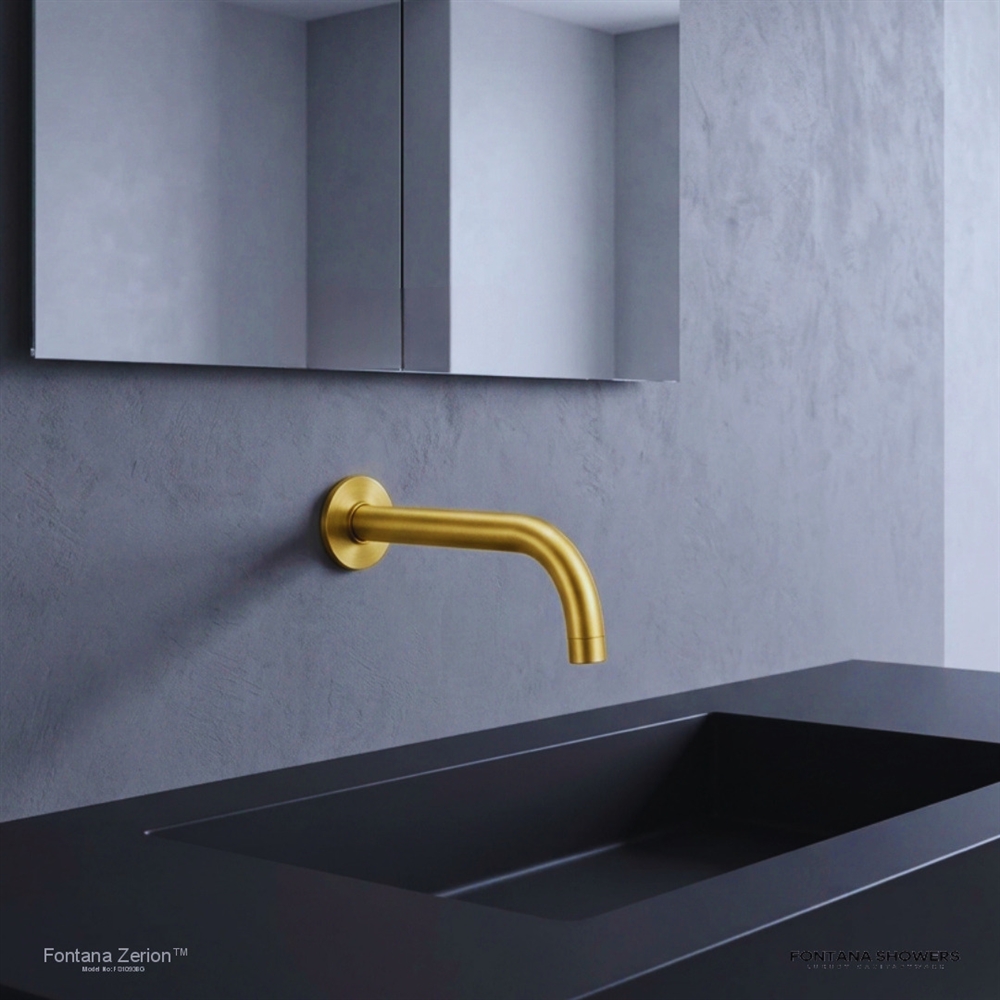
FS1093BG is a commercial wall-mounted touchless faucet with
single-hole spout mounting and a nine-inch projection. The
elevated configuration keeps counter surfaces open while
requiring deliberate basin, wall cavity, sensor, water-supply,
and service-access coordination.
Read More
The related FS1090 field record shows that deeper basin
installations sometimes required sensitivity refinement
during commissioning. A separate FS1090 installation review
by Tyler Reed documents calibration against reflective wall
tile, reinforcing the need to coordinate sensor aim, basin
geometry, and finish-wall conditions before turnover.
Sensor Response
The strongest related field record describes stable infrared
activation despite changing restroom lighting, reflective wall
materials, varying sink configurations, and fluctuating
inlet-pressure conditions during heavy daily use.
Read More
Tyler Reed's brushed-gold FS1090 review adds a measured
commissioning example: initial activation lag near 0.45
seconds was reduced to approximately 0.34 seconds after
repositioning, with stable 1.2 GPM output across 40–75 PSI.
Those values belong to the related FS1090 record and are
not presented as FS1093BG factory specifications.
Finish and Design
The current FS1093BG product page specifies a brushed-gold
finish, solid brass construction, and a wall-mounted nine-inch
spout reach. The warm low-glare finish is positioned for premium
commercial interiors where the faucet is both a functional
washroom component and a visible architectural element.
Read More
Related FS1094 brushed-gold reviews from office and
hospitality projects report months of continuous use with
stable sensor operation, low maintenance demand, and finish
appearance holding up under regular commercial use.
Facility teams should still align cleaning chemistry and
maintenance procedures with the actual FS1093BG finish-care
guidance.
Operating Function
FS1093BG is listed with a 0.5 GPM flow rate,
vandal-resistant aerator, sensor activation, and an adjustable
30-second automatic shutoff. These features support controlled
discharge and help limit prolonged unattended flow in
commercial use.
Read More
The related long-horizon records are consistent with the
operating priorities behind those specifications: reliable
activation, predictable shutoff, steady flow under varying
conditions, fewer nuisance events, and lower service demand
after commissioning. Actual field performance should be
verified against the project's supply pressure and basin
geometry.
Recommended Use
The evidence is most relevant to hotels, executive offices,
private clubs, restaurants, wellness properties,
healthcare-adjacent spaces, transportation facilities, and
other high-use commercial washrooms where wall-mounted
installation, hygiene, water control, and premium finish
coordination matter.
Read More
Commissioning records should capture sensor position, basin
depth, reflective wall conditions, supply pressure, shutoff
timing, aerator condition, access to concealed service
components, and any sensitivity adjustment so future
maintenance teams have a clear baseline for diagnosing
performance drift.
Review Summary
Primary Rating
Five out of five in the selected related wall-mounted
brushed-gold field record.
Operating History
Seventeen related commercial installations tracked across
projects completed from 2022 through 2025.
Recurring Pattern
Stable sensing, controlled flow, fewer recalibration
events, and reduced interruption-related service demand.
Read More
Reviewer Context
Evidence combines FS1090 wall-mounted brushed-gold
field records with additional FS1094 brushed-gold
commercial faucet observations from office,
hospitality, engineering, and facility settings.
Long-Term Follow-Up
Track sensor sensitivity, false activations, shutoff
timing, flow stability, finish condition, aerator
condition, and service-call frequency after handover.
Related Wall-Mount Evidence
The primary FS1090 record covers 17 commercial installations with
detailed observations on sensing, pressure variation,
recalibration, and service demand.
Extended Operating Context
The strongest record spans healthcare and transportation restroom
modernization projects completed from 2022 through 2025.
Product-Specific Specs
Model, finish, wall mounting, spout reach, flow rate, aerator,
brass construction, and shutoff details follow the current
FS1093BG product page.
Transparent Attribution
Related-model field observations are explicitly separated from
FS1093BG product-page specifications and commissioning
recommendations.
Find Out First
Get FontanaShowers emails of inspiration, new product releases, and more!